March 7, 2026
Program: “A Woman’s Place”
For Women’s History Month, we will be pleased to present “A Woman’s Place,” a compelling program by Julie Bartolotto, Executive Director of the Historical Society of Long Beach. In this presentation, Julie will share short biographical sketches of women from different eras and
communities in Long Beach history, celebrating their contributions and the rich diversity of the women who helped shape our city.
The Historical Society of Long Beach (HSLB) is a nonprofit organization dedicated to collecting, preserving, and presenting the history of Long Beach. Through its museum, archives, exhibitions, and educational programs, the HSLB connects community members and visitors to the past, helping to develop an inclusive narrative of the city’s people and places. Their work ensures that stories of everyday lives—as well as significant milestones—remain accessible and meaningful for future generations.
Julie Bartolotto, who has led the HSLB for many years, brings expertise in oral history and community storytelling to this engaging look at women who have helped shape Long Beach.
Whether you’re a history enthusiast or curious about the women behind the city’s growth and change, this presentation promises insights that resonate with Women’s History Month and beyond.
February 7, 2026
Program: Long Beach Commission on the Status of Women & Girls
Speaker: Alyce LaViolette, M.S., MFT, Author and Psychotherapist
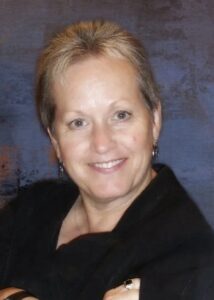
Alyce LaViolette
This meeting focused on the work of the City of Long Beach Commission on the Status of Women and Girls, a relatively new but highly active advisory body dedicated to advancing gender equity across our city.
Established to advise the Mayor and City Council, the Commission for Women and Girls works to identify and address issues affecting women and girls through research, advocacy, and policy recommendations. Its mission emphasizes improving safety, representation, opportunity, and
quality of life for women and girls of all ages and backgrounds, using an intersectional lens that recognizes how race, income, age, ability, immigration status, and other identities shape lived experience.
During the 2024–25 year, the Commission focused on building a strong foundation for long-term impact while also engaging deeply with pressing community concerns. Commissioners received briefings and testimony from local advocates, nonprofit service providers, City staff, and subject-matter experts on issues including domestic and intimate partner violence, sexual assault and survivor support, human trafficking prevention, mental health and trauma-informed care, early childhood and family supports, economic equity, and housing instability.
The Commission also advanced concrete recommendations to City leadership, such as advocating for the City of Long Beach to formally recognize Women’s Equality Day on August 26. In addition, the Commission established several ad hoc committees—focused on safety, mentorship and education, communications and outreach, and gender-equitable facilities—to move this work forward in a more targeted and collaborative way.
We will explore what the Commission has learned in its inaugural year, why its work matters for women and girls in Long Beach, and how community members and organizations like AAUW can stay informed and engaged.
January 10, 2026
Program: AAUW Tech Trek Panel
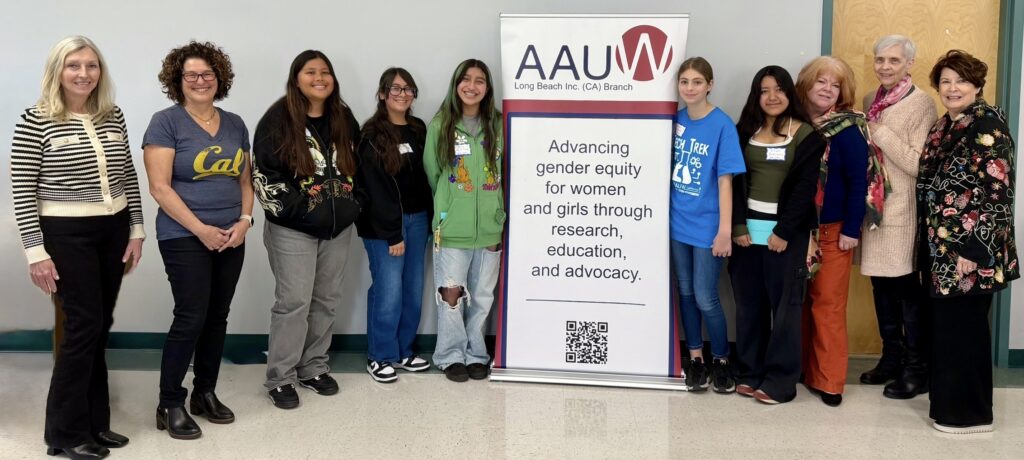
This presentation included a panel of former campers, who shared what life at Tech Trek was really like and how the experience has influenced their interest in STEM. In honor of education and opportunity, everyone was invited to come dressed in their favorite college t-shirt or school colors.
Seventh grade girls attending Tech Trek spend a full week on a college campus, taking part in dynamic, hands-on STEM projects and enjoying an early introduction to college life. Our branch can take pride in having sent more than 100 students to camp since 1998—a tradition made possible only through the ongoing generosity of AAUW Long Beach members.
This meeting was also our annual Tech Trek fundraiser. Our goal was to raise enough to sponsor 12 campers at UC Santa Barbara or Whittier College this summer. The cost per camper is $1,200. Contributions were welcomed. listed in the Yearbook). $4,385 was raised at this meeting, giving us a total of over $12,000.
November 1, 2025
Program Panel Discussion: Supporting Women Veterans’ Transition to Civilian Life
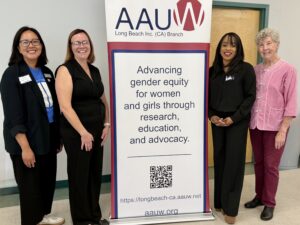
L to R: Ann Nacino – VA Long Beach and Elizabeth Dole Foundation Fellow; Kristin Camacho – Navy Veteran, general contracting business owner; and Daisy Tate – Marine Corps Veteran, Co-Founder of Veterans Supplemental Support Network (VSSN).
This meeting presented a panel discussion focused on the unique experiences of women veterans as they transition to civilian and academic life. Featuring women veterans and service providers, the conversation explored challenges, support systems, and opportunities for advocacy.
October 4, 2025
Program: Take Action to Fight Project 2025: A Call to Defend AAUW Values” (Program Slide Presentation HERE)
Members learned from presenters AAUW CA Public Policy Chairs Amy Hon and Missy Maceyko, about “Take Action to Fight Project 2025,” a statewide initiative from AAUW California Public Policy that mobilizes resistance to policies threatening equity in education, civil rights, and democratic norms. This presentation highlighted how members could take meaningful action at the local or national level through advocacy, coalition-building, and legal engagement—directly aligning with AAUW’s mission to advance gender equity through education and public policy.
September 6, 2025
Branch Meeting Slide Show HERE
Program: “Today’s Undergrads and CSULB/LBCC Scholarship Recipients” (Program Slide Show “Today’s Undergrads” HERE)
This program explored a topic that touches the heart of our mission: Today’s college undergraduates — the students who shape the future of our communities, workforce, and civic life. We will also welcome CSULB and LBCC scholarship recipients.
We’re used to picturing the traditional college student as 18–22 years old, living on campus, and attending full-time. But at institutions like Long Beach City College (LBCC), California State University, Long Beach (CSULB), and across the country, that image no longer fits the majority. In fact, more than 60% of LBCC students attend part-time, and a large portion are over the age of 25. Nationally, undergraduates are more likely than ever to be first-generation college students, financially independent, and juggling work or caregiving responsibilities.
This year’s incoming class — the Class of 2029 — is also the most ethnically diverse in American history. At LBCC, nearly 60% of students identify as Latinx, and African American/Black and Asian American students also make up significant portions of the student body. At CSULB, more than 70% of students identify as students of color, reflecting the diversity of the region and the shifting demographics of higher education. Nationally, fewer undergrads than ever identify as White and middle-class. Locally and nationally, most college students are female.
Many undergrads today face high levels of financial stress, mental health concerns, and uncertainty about the return on their college investment. We’ll dive into:
- What college looks like today — demographically, financially, and culturally
- What makes Gen Z students unique in how they learn, communicate, and organize
- Impact of artificial intelligence (AI) on their studies and the job market
- How institutions like CSULB and LBCC are adapting to better serve these evolving needs
As AAUW members committed to education equity and women’s advancement, understanding this transformation is essential. This discussion promises insight into the challenges and resilience of today’s students.